
The Picture Book Buzz - July 2026 Interview with STEAM Team Books Member
Whether you're here to support the STEAM Team authors, curiosity, or because you love nonfiction books, I hope you read to the end because you'll discover some amazing authors and super spectacular books!

Today I have the pleasure to introduce you to five authors from STEAM Team Books – a group of authors and illustrators who joined together to celebrate and help promote their STEAM books. I hope you enjoy this peek at this delightful book and its fascinating creative.
"STEAM Team Books is a group of authors who have a STEM/STEAM book releasing in 2026. It includes fiction & nonfiction, trade or educational books.”
You can find out more about their books on the website: https://www.steamteambooks.com/.
Tell us a little about yourself. (Where/when do you write? How long have you been writing? What is your favorite type of book to write? What drew you to STEAM books? etc.)

Jilanne Hoffmann – Heartland (Little, Brown Books for Young Readers 7/7/2026) – I’ve been a freelance writer forever and have been writing kidlit for over ten years. I love different aspects of every book I write, but there’s a world of difference between board, picture, and chapter books and novels, all of which I’ve written and have been published or are forthcoming this year. The word count of novels feels luxurious, but writing picture books taught me how to cut mercilessly. I love STEAM because my first degree is in engineering, but my heart belongs to communicating the wonders of science.
[Author of - The Ocean’s Heart: The Tiny Creatures Essential to Life, illustrated by Khoa Le (2026), A River of Dust : The Life-Giving Link Between North Africa and the Amazon, illustrated by Eugenia Mello (2023) The Honey Bear Hive Shaped Board Book, illustrated by Erica Harrison (2023) and Happy Camper Shaped Board Book, illustrated by Erica Harrison (2023).]

Melissa Stewart - Sharks in Kansas: An Ancient Ocean in the Middle of America (Random House Studio/PRH 7/7/2026) –Many writers know what they want to do from a very young age, but I never considered writing as a career option until a college professor suggested it. Up until then, I didn’t even know writing was a job. No one I knew was a writer, and my school didn’t host author visits. I’ll always be very grateful to that professor for seeing a talent in me and letting me know.
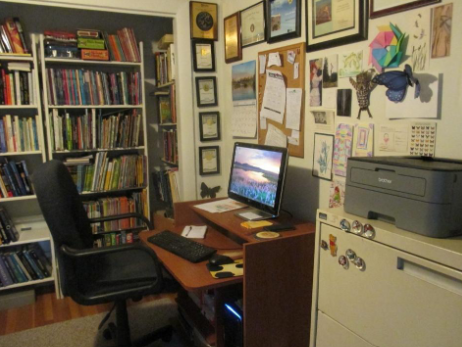
I do most of my writing in a spare bedroom in my house. I start working as soon as I get up, usually around 5:00 a.m. When I get stuck, I stop to eat breakfast and take a shower. Something about the steam and running water frees my mind, and I usually solve the problem. After lunch, I go for a 2-mile walk and then switch my focus to researching, planning school visits, and taking care of business tasks. I stop working at 4:30 p.m., so I can start making dinner.
Rachel Carson once said, “Science gives me something to write about,” and I couldn’t agree more. I enjoy writing at a variety of different levels, from board books to books for adults, but grade 3 is really my sweet spot.
[Author of more than 200 books, including Monarch and Mourning Cloak: A Butterfly Journal, illustrated by Sarah S. Brannen (2026), Meet the Mini-mammals: A Night at the Natural History Museum, illustrated by Brian Lies (Beach Lane/ Simon & Schuster 2025), Whale Fall: Exploring an Ocean-floor Ecosystem, illustrated by Rob Dunlavey (2023), Tree Hole Homes, illustrated by Amy Hevron (2022), Summertime Sleepers: Animals That Estivate, illustrated by Sarah Brannen (2021). She also co-wrote 5 Kinds of Nonfiction: Enriching Reading and Writing Instruction with Children’s Books and edited the anthology Nonfiction Writers Dig Deep: 50 Award-winning Authors Share the Secret of Engaging Writing (2020).]

Darcy Pattison - NIGHT: How Copernicus Made the Sun Stand Still and the Earth Move (Mims House 7/7/2026) – My husband and I own a three-story Victorian house that serves as our office. I work in the oddly shaped attic, roughly 9 am to 4 pm each day. It’s great to have an office to go to, a space of my own.
I write picture books more than any other format because the short format appeals to me. Writing tight, cutting and cutting words to find the story, is a process that fits the way I think.
[Author of 72 books, including Climate: How Wladimir Koppen Studied Weather and Drew the First Climate Map, illustrated by Peter Willis (2025), Jeremy, the English Garden Snail: Heredity, Citizen Science, and #snaillove, illustrated by Olga Goina (2025), Pelorus Jack, the New Zealand Dolphin, illustrated by Eva Dooley (2024), I Am the Thirsty Desert, Jordan Kim (2023), Aquarium: How Jeannette Power Invented the Aquarium to Study Marine Life, illustrated by Peter Willis (2023),George Washington's Engineer: How Rufus Putnam Won the Siege of Boston without Firing a Shot, illustrated by Terry Kole (2022), Diego, the Galápagos Giant Tortoise: Saving a Species from Extinction, illustrated by Amanda Zimmerman (2022), Fever: How Tu Youyou Adapted Traditional Chinese Medicine to Find a Cure for Malaria, illustrated by Peter Willis (2022), A Little Bit of Dinosaur, illustrated by John Joven (2021), A.I. How Patterns Helped Artificial Intelligence Defeat World Champion Lee Sedol (2021), and Erosion: How Hugh Bennett Saved America's Soil and Stopped the Dust Bowl (2020).]

Kelly Rice Schmitt - The Farm Next Door (Knopf BFYR 7/14/2026) – I have always loved writing, but I started focusing seriously on Kidlit in 2016. I love to write stories that weave imagination and truth together. Finding interesting ways to convey facts or true stories is so much fun! I think that is part of why I am drawn to STEAM subject matter. I work in energy supply and trading, a field that is very male dominated. As one of the only females in my training program, I felt compelled to inspire more kids, especially girls, to get excited about STEM. And I’m also a big advocate for the “A” of steam, Arts! I’m a singer and performer and believe the performing arts provide numerous benefits to the growing minds and spirits of kids. As for the “how” of my writing, I write anywhere I can! As a mom of 3 who also has another job, I squeeze my writing time in—early mornings, after the kids are in bed, and waiting in car lines. I try to think through my stories throughout each day and let them work in my subconscious. On manuscripts I’m editing or drafting, I often work on a small section at a time on the go, either in the notes on my phone, or on a print-out copy. There is so much in-between time that I try to harness.
[Author of I Truck: A Big Rig's Epic Trip (2025), I Fuel: How Energy Powers Our Busy World (2024), and I Ship: A Container Ship's Colossal Journey (2023), all illustrated by Jam Dong.]

Elizabeth Shreeve - Dinosaurs to Dragons: The Lore and Science of Mythical Creatures (Atheneum/Simon & Schuster 7/21/2026) –I grew up in a family of writers and scientists along the Atlantic coastline. In 9th grade, my English teacher challenged us by saying that unless you can explain something in words, you really don’t understand it. Yikes! This statement doomed me to life as a writer. Starting with poetry and journaling as a child and then decades of business writing for my job in the architecture field, I started writing stories for my kids and became the author of children’s books. These days, from our home in the Bay Area, I’m focused on nonfiction, returning happily to early interests in geology, biology, paleontology, and art history.
[Author of 9 books, including On an Ocean Journey: Animals in Motion Through the Seas, illustrated by Ray Troll (2025), The Oddball Book of Armadillos, illustrated by Isabella Grott (2024), The Upside-Down Book of Sloths, illustrated by Isabella Grott (2023), Out of the Blue: How Animals Evolved from Prehistoric Seas, illustrated by Frann Preston-Gannon (2021), Captain Freddy Counts Down to School, illustrated by Joey Chou (2016), Oliver at the Window, illustrated by Candice Hartsough McDonald (2009), and The Adventures of Hector Fuller chapter book series, illustrated by Pamela R. Levy (2004).]
What has been the most interesting or odd experience (you’re willing to share) of your children’s literature career so far?
Jilanne Hoffmann – I’m going to go with a recent interaction with kids! I presented my latest picture book, The Ocean’s Heart, at the Bay Area Book Festival, where two little boys sat in the front row. They were about four or five years old. After I was done reading the book, I invited kids to come up and look at the pictures more closely. These two made a beeline for the book, and started pointing and asking, “What’s that?” over and over. At first I said, “That’s a jellyfish,” but then one of them said impatiently, “But what KIND?” So, then I knew I had to give them species names. And when we got to a page where a sea butterfly was catching its food they said, “That’s a mucus bubble!” They knew this even though I’d only described it once while reading the story. These little guys were sponges! Of course, each of them went home with a signed book. It’s thrilling to watch the fire of curiosity burn so brightly. I hope they become marine biologists!
Melissa Stewart – Hmm, that’s an intriguing question. One of the true highlights of being a children’s book author is visiting schools. They can be:
—interesting and entertaining. You never know what kids are going to ask or say.
—insightful. Sometimes kids see things in my book that I never noticed.
—fun and funny. There are so many opportunities for levity.
—stressful. Sometimes the AV doesn’t work.
—and heartwarming. Kid-compliments are the best!
Kelly Rice Schmitt - To create a traditionally published picture book is a bit of an odd experience itself! So many people come together to help create your final book, but most often author, illustrator, editor, art director don’t get to meet in person before—or in many cases at all or not for years after a book is published. It’s a funny thing to work remotely with people who are dissecting (with love) the art of your heart but not get to go to happy hour with them like in an office setting!
Elizabeth Shreeve - Nonfiction research is the best! While writing Dinosaurs to Dragons, I met so many knowledgeable and helpful people. The book explores possible origins and inspirations for mythical creatures from many cultures around the world. I wanted to include Australia—in particular, the water spirit known as the bunyip—but I don’t have personal links there. Over many weeks and multiple emails, I got to know a few anthropologists at Australian museums.
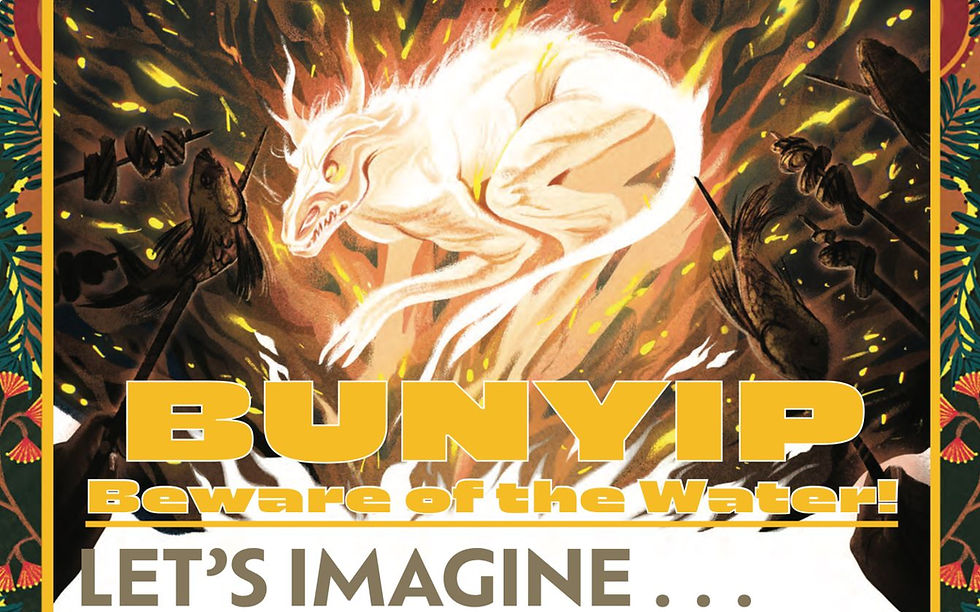
One of them put me in touch with a tribal elder, who gave me permission to adapt a traditional bunyip story for the book. That became one of my favorite sections. Maybe some
day I can visit the Murray River in person… and hear the evening call of the bunyip bird!
Wonderful answers. Now that we know a little more about all of you, what sparked your interest and caused you to write or illustrate this book?

Jilanne Hoffmann – Heartland (7/7/2026) – I read Karen Hesse’s Newbery-winning verse novel, Out of the Dust, early in 2019, and in a way, it gave me the idea and permission to write about my experience growing up on a small farm in the Midwest during the farm crisis of the 1980s. And I was smitten by the verse novel form. But then when my publisher wanted my historical story to also be contemporary, I discovered I could intertwine today’s environmental crisis in Iowa with the story from the 1980s. And it made the aspects of both time periods resonate even more strongly. I loved referring to Rachel Carson’s Silent Spring and showing kids that there are ways to research ground water quality and fight for their rights to clean air and water just like kids are doing with the help of the legal organization, Our Children’s Trust. I talk about that in my author’s note.

Melissa Stewart - Sharks in Kansas: An Ancient Ocean in the Middle of America (7/7/2026) –
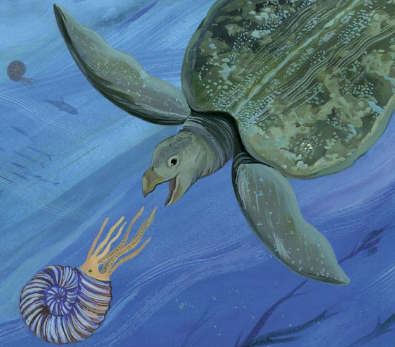
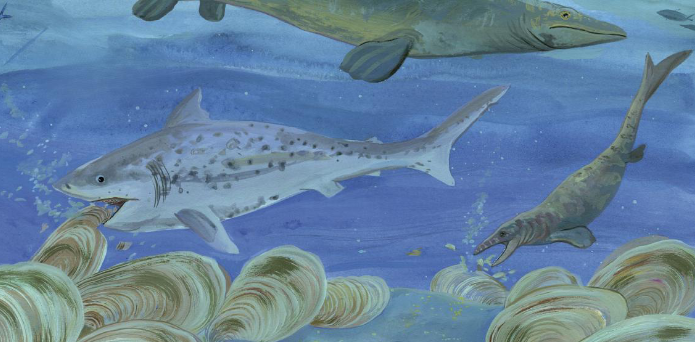
As I was writing the book Mega-Predators of the Past, I was astonished to learn about Archelon—a prehistoric sea turtle the size of a small car. But what was even more amazing than the turtle’s supersize is where it lived — smack dab in the middle of the North American continent.
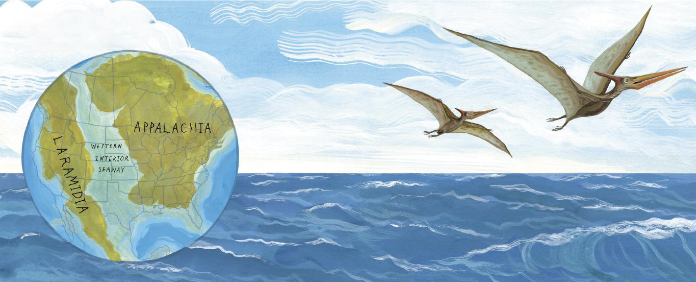
Up until that moment, I’d never heard of the Western Interior Seaway, and I had no idea that the land we now call the Great Plains had once been covered by an ancient ocean. I had to know more, and once I discovered the incredible cast of creatures that called the seaway home (including a dozen different kinds of sharks), I knew I had to write a book about how the seaway formed and how it changed over time.

Darcy Pattison - NIGHT: How Copernicus Made the Sun Stand Still and the Earth Move (7/7/2026) – In 2024, I visited the Czech Republic and Poland. Our family had hosted a high school exchange student from Prague, so we went there to meet his family and visit with him. Afterwards, we went to Poland to visit a former exchange student. While in Poland, we went to every site associated with the astronomer Copernicus. What fun!
We visited Torun, his birthplace, and his university in Krakow. But my favorite was visiting Frombork Cathedral. Copernicus was a Catholic cleric and worked at the Frombork Cathedral for over 30 years. It sits on the edge of the North Sea, very remote. Driving there at night, we thought we were lost! The bed and breakfast where we stayed was just a couple blocks from the cathedral, but we thought we were lost on a remote frontier.
The B&B owner told us that even today the location is so remote that in the winter, they hear wolves howling. Oh. And in Copernicus’s day, it would have felt even more isolated. The trip made possible Copernicus’s story, Night.
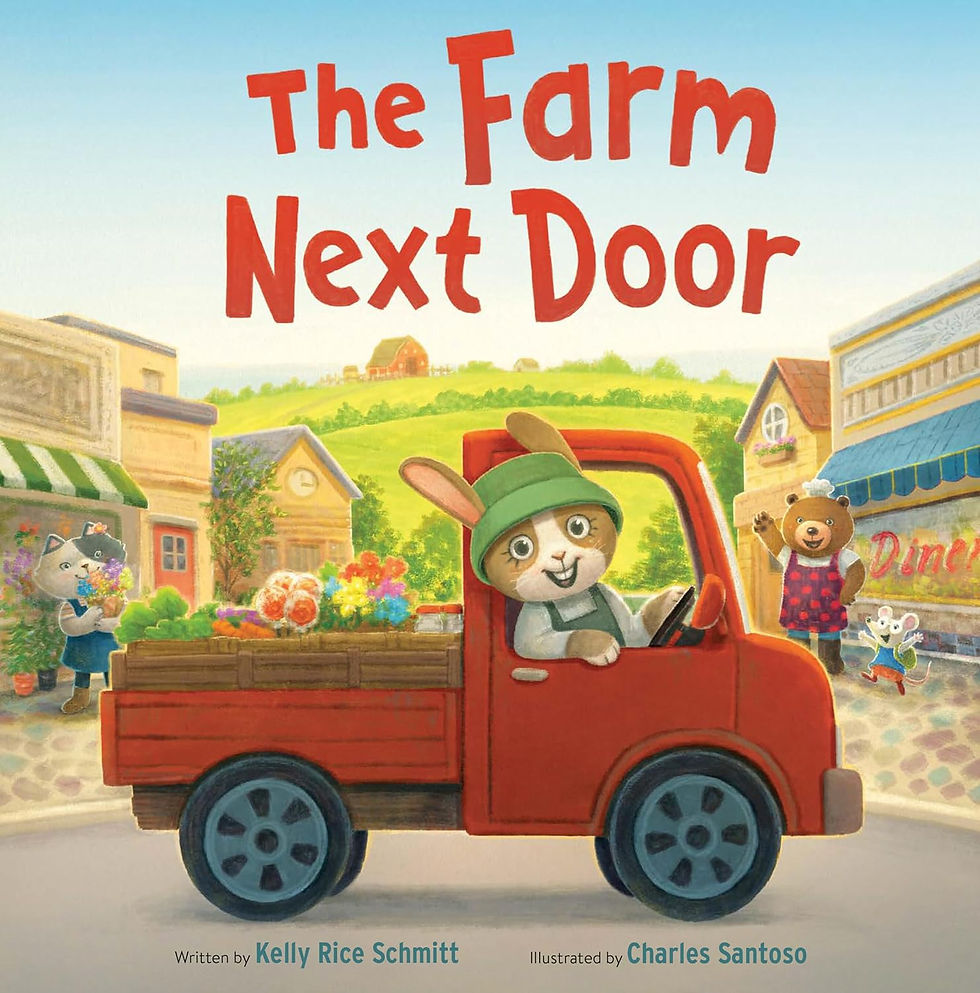
Kelly Rice Schmitt - The Farm Next Door (7/14/2026) – The Farm Next Door originated as a desire to way to simply explain the concept of the money system for children. Having studied finance because I was drawn to the people that businesses create products and services for, I had long wanted to create a book on this topic. I was inspired by Grace for President by Kelly DiPucchio and LeUyen Pham, which seamlessly weaves a fantastic story with deep teaching moments about the electoral college. I hope Charles Santoso and I along with the Knopf BFYR team have been successful in creating a story about an independent strong willed farmer who learns to accept help while also explaining to kids how they are a part of their local economy.
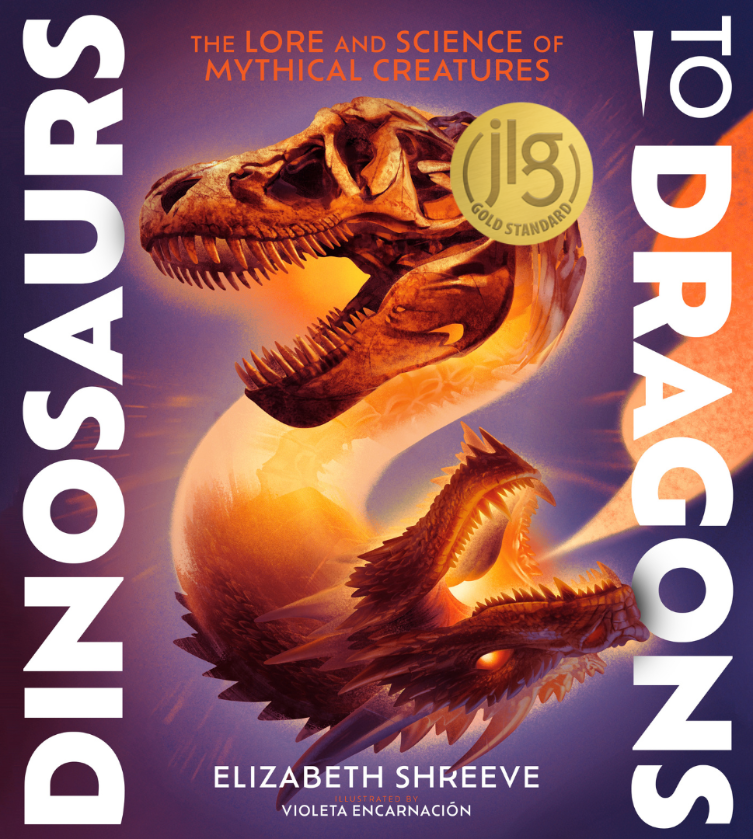
Elizabeth Shreeve - Dinosaurs to Dragons: The Lore and Science of Mythical Creatures (7/21/2026) – About ten years ago, I bought a dusty old book at a library sale called Mermaids and Mastodons: A Book of Natural & Unnatural History, by Richard Carrington. When I opened the cover, a shiver ran up my spine. Fossils, dragons, ancient art… how could I resist?
Dinosaurs to Dragons began in that moment. The project changed me as a person, expanding my horizons to new places, cultures, and natural wonders. We are all connected through storytelling! I know that the book barely scratches the surface of mythical traditions, but I hope that it will inspire young readers to make their own stories.
I love all the wonderful ways that these books were inspired. Is there anything special you want your readers to know about your book?

Text © Jilanne Hoffman, 2026.
Jilanne Hoffmann – Heartland (7/7/2026) - Of all my books so far, this one is my most personal, because I lived through the farm crisis of the 1980s and knew about farmers taking their own lives because they were so far in debt. I still have family members who farm, and I know how dangerous and hard farming is, and how farmers are under the thumb of huge, vertically-integrated Agriculture corporations who peddle fertilizer and pesticides and who hold farmers between a rock and a hard place because farmers can’t control the prices of their inputs or outputs. Plus, governmental farm policy and big Ag interests often encourage them to make decisions that are not in the best interests of the environment.
Text © Melissa Stewart, 2026. Image © Becca Stadtlander, 2026.
Melissa Stewart - Sharks in Kansas: An Ancient Ocean in the Middle of America (7/7/2026) – One of the reasons I’m so excited about this book is because there is no other children’s book about the Western Interior Seaway, which is surprising because it submerged 13 U.S. states and 5 Canadian provinces. Isn’t it amazing that at least a dozen different species of sharks once lived where we live now? Plus, there were mosasaurs and plesiosaurs and lots of other cool critters, too?
Darcy Pattison - NIGHT: How Copernicus Made the Sun Stand Still and the Earth Move (7/7/2026) – I was shocked that Copernicus lived before telescopes were invented. All his observations were made with the “naked eye.” He just went out and looked up. Well, then he went back inside and did complicated mathematical calculations.
Whenever possible, I read the original documents that scientists wrote. In this case, Copernicus wrote, On the Revolutions of the Heavenly Spheres. There are many translations, even one with a foreword from famous scientist Stephen Hawking. But I preferred the plain translation by Charles Glen Wallis to avoid any extraneous opinions.
When I read Copernicus’s book, the first chapter was easy because he explains concepts—it's always best to get the information straight from the source. The rest of the book is hard because he’s explaining the math. Fortunately, in an elementary children’s book, I didn’t need to explain all that math!

Text © Kelly Rice Schmitt, 2026. Image © Charles Santoso, 2026.
Kelly Rice Schmitt - The Farm Next Door (7/14/2026) – Just as Farmer Fran is a vital part of her community in The Farm Next Door, so are kids! Every time a child goes to the store with their family, spends or saves birthday money, or donates money or time to charity, they are part of their local economy. Their decisions help the people and families around them live their lives and impact their community. I hope kids can use The Farm Next Door to learn more about how they are connected to their community both as friends and neighbors, and also as customers.

Text © Elizabeth Shreeve, 2026. Image © Violeta Encarnación, 2026.
Elizabeth Shreeve - Dinosaurs to Dragons: The Lore and Science of Mythical Creatures (7/21/2026) – Each of the book’s ten chapters explores a mythical creature—three of the land (griffin, unicorn, yeti), three water (bunyip, mermaid, kraken), three air (fairy, phoenix, Quetzalcoatl), and dragons. Chapters open with a short discovery scene—a moment when a person might have encountered a strange fossil or unfamiliar, mysterious animal. My hope is that readers will imagine themselves in a long-ago time, before we had mapped out the world and developed modern science. So much of everyday life was a mystery!
Each of these sound so enticing and packed with STEM! What was the hardest, or most challenging, part of writing or researching your book? Was there a bit of your research you didn’t get to include?
Jilanne Hoffmann – Heartland (7/7/2026) - On the writing side, I had to cut many poems from the original version of the novel to make room for the contemporary story. And I had to make sure I wove the two stories together so they would resonate in as many ways as possible. Some of the poems lost a bit of their musicality because I had to tighten them so much. That was hard. But the research I did on Iowa’s groundwater gutted me. It’s horrifying. It’s not just the large animal feeding operations; it’s the way chemicals are promoted and used that also adds to the problem. I hope that adults will take notice along with the kids. There’s a reason why Iowa’s cancer rate is so high.
Melissa Stewart - Sharks in Kansas: An Ancient Ocean in the Middle of America (7/7/2026) - There was SO much we couldn’t include. Originally, the manuscript began 130 million years ago and included much more about the geological changes that cause the seaway to appear and then slowly drain. Little by little, I whittled away until the height of the seaway was described. Luckily, some of the geology did end up in the backmatter, so curious kids can learn more.

Text © Darcy Pattison, 2026. Image © Peter Willis, 2026.
Darcy Pattison - NIGHT: How Copernicus Made the Sun Stand Still and the Earth Move (7/7/2026) – When you research a scientist that lived hundreds of years ago, it’s still crucial to find original source documents. Reading his original book in translation was great. But more important was going to Frombork Cathedral where Copernicus lived and worked for most of his life. The cathedral today is much bigger than in Copernicus’s day. But the location—the remote village on the edge of the North Sea—was still relevant. It was a slow pace of life built around the rhythms of a spiritual life dictated by the Catholic church. It gave Copernicus the time to think, to calculate, to debate with himself and others, and to produce a lasting work that has affected generations.
Kelly Rice Schmitt - The Farm Next Door (7/14/2026) – The Farm Next Door went through major revision when the acquiring editor changed houses. My editor, Esther Hernandez, who ended up working on the project right after acquisition, had some ideas to help me amp up the heart and kid-relatability of this book to change not so much the plot, but the format of the book. It initially had a wider lens with a more informational book feel, which followed money flowing through the town from one person’s transaction to the next. It showed how everyone was connected to Fran in the framing of the book, but it wasn’t told from Fran’s point of view. Esther proposed that if we focused on how one person could impact their economy, it may be easier for kids to connect. It was difficult to get the logistics right to show the sequence of events and which businesses would be patrons of Fran and then later also have a part in restoring Fran’s farm after a storm destroys it. I’m so glad I figured it out though, because I just love the final book and I hope kids do too!
Elizabeth Shreeve - Dinosaurs to Dragons: The Lore and Science of Mythical Creatures (7/21/2026) – Dinosaurs to Dragons is BURSTING with images! Violeta Encarnación created beautiful artwork for the cover, chapter openings, and spot art through the chapters. But most of the imagery consists of photographs that I found in museum collections, art galleries, and image houses. This was a huge undertaking—enormous fun, endlessly fascinating, and insanely time-consuming. I entered each possible image into a spreadsheet, with source information. Simon & Schuster provided a budget for licensing, but in the final flurry they decided to include ALL the images I’d gathered. So much for the budget! I used a consultant, Photo Affairs, to track down the licensing and find discounts; that was a lifesaver. In the end, the book is beautiful, but I will be wiser and more careful next time.
Are there any upcoming projects that you are working on now that you can share a tidbit with us?
Jilanne Hoffmann – I’ve got a picture book story inspired by a true event starring wild animals that I’ll be sending to my agent soon. And I’ve got another middle grade novel brewing that integrates historical events into the story.
Melissa Stewart – Yes, my next book will enter the world next spring. It’s called Meet the Mega-Mammals and is about giant prehistoric mammals, like giant ground sloths and American lions and Columbia mammoths.
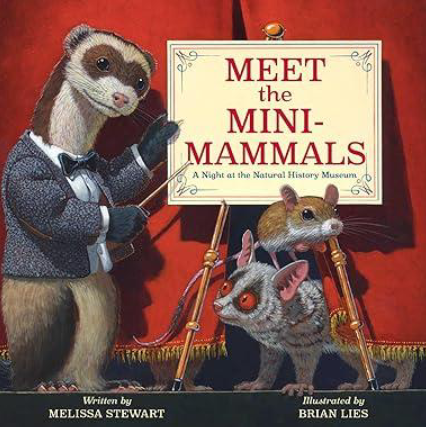
It’s a companion title to Meet the Mini-Mammals and is also illustrated by uber-talented Caldecott Honoree Bran Lies. I’m hoping to see the final art for this new book soon.
Darcy Pattison – I’ve found another fascinating science history story. Cool will explore how ice cream changed the world of physics! Look for it in 2027.

Kelly Rice Schmitt – The next title in my Lerner On the Move series is I Fly: An Airplane’s Fantastic Flight. Like the first and third books in the series (I Ship and I Truck) our story follows a vehicle’s journey from start to finish but includes lots of little details (which are so fantastically illustrated by Jam Dong!) that readers don’t get to see every day in their own experience with flight. It has watercolor incorporated into Jam’s digital art and the skies are gorgeous throughout! It’s a perfect read for any airplane or vehicle lover in your life or library!
Elizabeth Shreeve – Yes! Next up is a middle grade nonfiction book coming from Zest/Lerner (Fall 2027) entitled Germ Wars: When Diseases Ruled and Science Fought Back. I’m collaborating with my friend Bertha Vazquez, education director at the Center for Inquiry. The book follows the history of children’s health starting in 1800, when only about half of children in the U.S. survived past their 5th birthdays. I learned so much about public health and infectious diseases while writing the book—and I really hope it will fill gaps in our understanding of modern medical science. After that I’ve got a few books that aren’t announced yet, including a second picture book with artist Ray Troll and a middle grade chapter book about one of my favorite topics: Neanderthals!
Intriguing. We will have to keep our eyes open for these books. Last question, who is your STEAM hero or heroine, living or dead (scientist, naturalist, author, teacher, etc.)? Why?
Jilanne Hoffmann – I quote a line from a poem by Wendell Berry in my book. He argued against Earl Butz’s “Go big or get out” farm policies back in the 1970s. And he’s been an advocate for small farmers and sustainable farming his entire life. The other heroic figure I refer to in the book is Rachel Carson and chapter eight in Silent Spring. It describes how so many birds and animals died due to pesticide poisoning. I hope HeartLand serves as a tribute to Berry and Carson and their work to promote a sustainable future for humanity on this planet and also as a tribute to farmers who are doing their best to promote sustainable farming.
Melissa Stewart – Rachel Carson. If it weren’t for her ground-breaking work as a scientist and a writer, our planet would be in even graver danger right now. Silen Spring led directly to the Clean Air Act, the Clean Water Act, the Endangered Species Act, and the founding of the Environmental Protection Agency. Let’s hope we can find a way to rekindle the single-minded determination she brought to the environmental movement before it’s too late to save our precious planet.
Darcy Pattison – So many scientists, too little time. I’m amazed by the human spirit that seeks to know more, to find out the whys and hows, and the curiosity that must be satisfied. As I research scientists, I’m always struck by the human’s thirst to figure out this world around us. In their quests, scientists overcome great obstacles and persevere somehow. All the scientists—those who study of the world around us—inspire me. I want to know what they know and pass it along to kids.
Kelly Rice Schmitt - Jane Goodall listened to nature speaking to her and then lived out the example she wanted to set for the world. We all can learn from her life and work. I’m also constantly inspired by every STEAM kidlit creator I come across. Children truly love nonfiction and informational books, and the creators of the incredibly engaging books coming out these days find a myriad of ways to get kids to love learning. I’m in awe of the creativity and research that goes into creating books that readers can connect with that also encourage them to dive deeper into STEAM topics. STEAMTEAM is creating life-long learners!
Elizabeth Shreeve – I recently attended CSICon, an annual conference of scientists, critical thinkers, and skeptics that’s part of the Center for Inquiry. CFI grew from an earlier organization founded by Carl Sagan and others. This year’s speakers included Bill Nye the Science Guy and the amazing Dr. Andrea Love. Also, Michael E. Mann and Peter Jay Hotez—two experts in climate science and global health, respectively, who recently co-authored Science Under Siege (Hachette, 2025). These are just a few examples of today’s science leaders dedicated to exploring and communicating the hard truths. Plus, science teachers, of course!
Thank you for highlighting these heroes. NOW, let me take a moment to introduce you to these amazing STEAM books!
Heartland by Jilanne Hoffmann (Little, Brown Books for Young Readers 7/7/2026) – This MG novel opens with three thought-provoking free verse poems by time and weather, then alternates between the feisty, first-person narrative about an endearing, off-beat, bookish tween girl's experiences and self-discovery, as she helps her mom on their family farm, and free-verse poems in her dad's and mom's (as entries from her childhood journal), and even the farm's voices. Wonderfully weaving the struggles of six generations of rural farming, the author's own experience of the 1980 farm crisis, environmental justice, and current struggles against factory farming into a heartfelt coming of age story about time, friendship, family dynamics, and an empowering call to kids to stand up for the environment and workers. It's a gripping and engaging read of a family mending and working to save their corner of the world.
Synopsis: Out of the Dust meets Me and Marvin Gardens in this coming-of-age novel about a young misfit searching for the truth of her family's past, set against the backdrop of an environmental cover-up.
Twelve-year-old Xyla is sick of two things: working on her family's sixth-generation Iowa farm and her mother's nagging words, "Pay attention!" But Xyla can't help getting lost in the thoughts that fill her head, which sometimes leaves a wake of costly mistakes. If only her mom would tell her something—anything—about her dad, who left when she was little. Then maybe she could run away to live with him.
Xyla's world gets even messier as a new family begins renting a vacant house on the farm, and the daughter is the kind of kid Xyla's mom clearly prefers—focused and motivated. But when the girls stumble across an environmental disaster right next door, Xyla must learn to trust her new friend and her own complicated mother to figure out how to stop it.
Told in alternating timelines between the past and present, this heartfelt story brings to life a funny, hopeful, unforgettable narrator as she unravels the mysteries of her family and farm.
Keep an eye out for the Educator's Guide for Heartland: https://jilannehoffmann.com/my-books/heartland/.
Sharks in Kansas: An Ancient Ocean in the Middle of America by Melissa Stewart, illustrated by Becca Stadtlander (Random House Studio 7/7/2026) – An exciting and stunning nonfiction about the little known Western Interior Seaway. A great historic map, superimposed on a current map, shows a wide sea running from Alberta, Canada to Mexico, splitting the western bit of the U.S. and Canada ("Laramidia") and a large chunk of the eastern U.S. and Canada ("Appalachia") 85 million years ago. Equally amazing are the animals (dinosaurs, sharks, and a flightless bird) who lived there. Yep - sharks in Kansas. Using the foil of a family road trip, the book takes readers back in time to see the animals, geologic changes, and the animal's ultimate migration and fossilization. Sidebars offer pronunciation guides, class, group, size, weight, and diet for each animal. Great back matter offers additional information on the Western Interior Seaway. It's a wonderful book for dinosaur lovers, budding geologists, and anyone who loves STEM.
Synopsis: Sharks in Kansas? Yes, it's true! Take a fascinating journey back 85 million years to a time when Kansas was submerged under a vast ocean teeming with incredible prehistoric sharks.
Sharks in Kansas? Seems impossible, right? After all, Kansas is smack dab in the middle of the United States—more than 1,000 miles from the closest ocean. But the world hasn’t always looked the way it does today.
Once upon a time, 85 million years ago, the middle of America was submerged in water--and incredible creatures roamed the sea. On a typical afternoon, a small herd of Claosaurus munches on plants along the shoreline. Above them, a Pteranodon glides across the sky in search of fish... when, suddenly, a Squalicorax grabs a young dinosaur with its bone-crunching bite. Chomp!
From the flightless bird Hesperonis to the mighty Tylosaurus, here is a fascinating look at many kids' favorite creatures and the mysteries of an ancient ocean.
Check out the Read Aloud Guide for Sharks in Kansas: https://melissa-stewart.com/wp-content/uploads/2026/01/SharkReadAloudGuide.pdf
NIGHT: How Copernicus Made the Sun Stand Still and the Earth Move by Darcy Pattison, illustrated by Peter Willis (Mims House 7/7/2026) – Bringing to life a young man from the 15th century who challenged established theories using his own observations and mathematics, is no easy feat. But engaging text and inventive illustrations present astrological theories, biases, and the scientific method in a very kid accessible way. Encouraging readers to think critically, experiment, observe, and not be afraid to stand up to the status quo when it is wrong. Wonderful back matter provides additional information on Copernicus, solar systems, and the planets in our solar system. It's a great book for kids who love biographies, space, and science.
Synopsis: Patterns in the Night Sky
On a March night in 1497, a young Nicholas Copernicus watched the moon glide across the sky and hide a distant star. When the star reappeared too soon, he knew something was wrong with the accepted science of his time. That single observation launched a lifetime of questions-and changed how we understand our place in the universe.
NIGHT tells the true story of how Copernicus challenged centuries of scientific thinking. Using only his eyes and simple instruments-no telescopes existed yet-he carefully measured the movements of planets across the dark skies above the Baltic Sea. Night after night, year after year, until the math finally worked: the sun stood still at the center, and Earth moved around it.
Young readers will discover how one curious mind and careful observation can overturn everything we think we know. With rich back matter including information about Copernicus's life, his astronomical tools, the importance of dark skies, and why scientific revolutions take time, this book brings history and science together in an engaging narrative that shows how real science happens.
About the Moments in Science Series
The award-winning Moments in Science series captures pivotal discoveries that changed our understanding of the world. Each book focuses on a specific moment when a scientist asked the right question, made a key observation, or solved a puzzle that had stumped others for centuries. Perfect for curious readers ages 6-10 and anyone who loves the stories behind scientific breakthroughs.
The Farm Next Door by Kelly Rice Schmitt, illustrated by Charles Santoso (Knopf BFYR 7/14/2026) – Channeling the joy and fun of seeing child-like animal characters doing adult jobs found in Richard Scary's books, the illustrations and text explore the economic dynamics of a solo farmer and the community she supports and builds. And everyone's discovery, most importantly Farmer Fran's, of how much they rely upon and need each other. A glossary and great note on economies and communities enhance this touching story's gentle look at money and the economy.
Synopsis: Discover how one individual impacts her community economically and how YOU can too in this inspiring story about a farmer and her friends!
Farmer Fran's community depends on her. She collects the eggs, milks the cows, picks the vegetables, and delivers everything to her customers, keeping the neighborhood going! Then a storm hits, destroying the farm, and Farmer Fran has to lean on her neighbors in her time of need. The town creates a fundrasier for her and Farmer Fran learns the true value of community.
For fans of Richard Scarry, here is a gentle introduction to the concept of money and community, using heartwarming animal characters, from a New York Times bestselling illustrator.
Dinosaurs to Dragons: The Lore and Science of Mythical Creatures by Elizabeth Shreeve, illustrated by Violeta Encarnación (Atheneum/Simon & Schuster 7/21/2026) – Engaging text, captivating illustrations, and historical photos team up with an ingenious format to explore the lingering lore of mythical creatures around the world and dive into the science around them. Each chapter examining the griffin, unicorn, yeti, bunyip, mermaid, kraken, fairies, phoenix, and quetzalcoatl, starts with an imagined scenario of a potential first sighting, explains the existing social-economics, history, and geography, and then surveys similar legends and lore around the globe (for mermaids - lasirèn, ningyo, Etruscan sea-girl, ceasg, yawkyawk, and sedna). Then the "Tracking Down Clues" examines the scientific evidence, debunks scams, and highlights potential fossils. . . often leaving room for unexplained possibilities. And finally, looks at what it would take physiologically for such entities to exist. A wonderful collection of quotations, invitations to create our own monsters, glossary, and resources round out a phenomenal and gripping middle grade nonfiction combining history, sociology, paleontology, and biography.
Synopsis: An imaginative nonfiction middle grade exploration of mythology, paleontology, and early civilizations through legendary creatures from across the globe and the fossils that might have inspired their origins that “will draw in the most reluctant readers” (School Library Journal, starred review).
What if we lived in a world with fire-breathing dragons? Or enigmatic, alluring mermaids? How about rainbow-nibbling unicorns? These fabled beasts aren’t as far from us as we think. After all, their legends had to have come from somewhere…
Join us as we weave together legendary tales and new scientific findings to uncover connections between real and mythical creatures. Delving into the past, we’ll see how our ancestors took what they found in the world and created the beloved fantastical creatures we dream about today.
Could the skull of a protoceratops have inspired the hooked beak of a griffin? From manatee to mermaid, heron to phoenix, we’ll trace the truth behind these fantastical creatures and make some new discoveries along the way!
Check out the Teachers Guide for Dinosaurs to Dragons: https://centerforinquiry.s3.amazonaws.com/wp-content/uploads/sites/44/2026/05/01154748/Teacher-Guide-DtoD-4.pdf
Thank you all for giving us a little peek into yourself and your new books. Wishing you all enormous success with you upcoming projects.
Jilanne Hoffmann – Heartland (Little, Brown Books for Young Readers 7/7/2026) –
Website: https://jilannehoffmann.com/
Instagram: https://www.instagram.com/jilanne2694/
Melissa Stewart - Sharks in Kansas: An Ancient Ocean in the Middle of America (7/7/2026) –
Website: https://www.melissa-stewart.com/
Darcy Pattison - NIGHT: How Copernicus Made the Sun Stand Still and the Earth Move (Mims House 7/7/2026) –
Website: https://mimshousebooks.com
Kelly Rice Schmitt - The Farm Next Door (Knopf BFYR 7/14/2026) –
Website: https://www.kellyriceschmitt.com/
LinkTree: https://linktr.ee/krschmittwrites
Instagram: https://www.instagram.com/krschmittwrites
Elizabeth Shreeve - Dinosaurs to Dragons: The Lore and Science of Mythical Creatures (Atheneum/Simon & Schuster 7/21/2026) –
Website: https://elizabethshreeve.com/


Comments