
The Picture Book Buzz - Interview w/Maria Gianferrari and Diana Sudyka + Giveaway
Maria Gianferrari is a community scientist, self-taught naturalist, and bird nerd who holds an M.A. in Creative Writing and a Ph.D. in English.
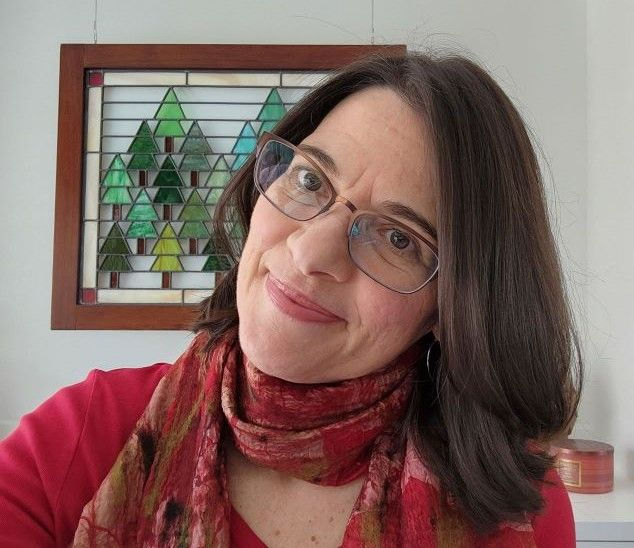
She is the author of narrative and expository nonfiction picture books which celebrate urban ecosystems, the natural world, and our wild neighbors. Maria lives in Massachusetts in a house encircled by trees where all kinds of birds, coyotes, bobcats, and the occasional bear wander through.

Maria’s the author of 22 books, including Rain and the Reading Horse, illustrated by Hannah Salyer (2025), To Dogs, with Love, illustrated by Isha Lobo (2023); Fungi Grow, illustrated by Diana Sudyka (2023), Thank a Farmer, illustrated by Monica Mikai (2023), You and the Bowerbird, illustrated by Maris Wicks (2023) and the companion books Being a Cat (2023), and Being a Dog (2022), both illustrated by Pete Oswald.
Diana Sudyka is a Chicago based illustrator. Early in her career she created screen-printed posters for musicians including Andrew Bird, St. Vincent, and The Black Keys.

She moved into the publishing world by illustrating several volumes of the best-selling series The Mysterious Benedict Society by Trenton Lee Stewart. Working mainly in gouache, watercolor, and ink, subject matter and aesthetic choices for her paintings are inspired by a passion for nature and science, as well as various folk-art traditions. Diana’s Instagram feed features her most current work, but a disproportionate number of pictures of lichens and moss as well. When not working in her studio, she gets outdoors as much as possible with her family.

Diana’s author-illustrator debut, Little Land, published in 2023. She’s also the illustrator of 17 books, including Angela’s Glacier, by Jordan Scott (2024), Fungi Grow by Maria Gianferrari (2023), Would You Come Too? by Liz Garton Scanlon (2022), Dear Treefrog, by Joyce Sidman (2021), and How to Find a Bird, by Jennifer Ward (2020).
Their newest picture book collaboration, Just One Oak: What a Single Tree Can Be, releases on April 7th.
Welcome Maria and Diana, thank you so much for stopping back by to talk about your new book!
Diana let’s start with you. Tell us a little about yourself. (Where/when do you write and illustrate? How long have you been writing and illustrating? What is your favorite type of book to write and illustrate?)
DIANA - I illustrate and write in my home studio. When I don’t have a book job I am actively working on, I maintain a regular studio practice and focus on personal work. I have been working as an illustrator for twenty years, but I have been drawing and creating my entire life.
It won’t be much of a surprise, but I love working on picture books about nature and science. I love the natural world, and I find endless inspiration from it. It’s one of the many reasons that I love working with Maria! It’s fulfilling to work with a writer that has a deep affinity for these things as well and also is able to put a lot of trust into what I do as a visual artist.
It's great to "meet" you, Diana. What is one of the most fun or unusual places where you’ve written or illustrated a manuscript?
DIANA – My favorite place where I have been able to work on writing a manuscript or sketching out a book, whether my own or written by someone else, is the Penland School of Craft in the Blue Ridge Mountains in North Carolina. It’s a very special place and about every three years, my husband Jay is invited to teach a screen printing class. We will stay as a family in a little cottage on campus, and while he teaches, my daughter and I like to explore the beautiful campus and go swimming in the local river. We’ll then come back to cottage, and I like to work on my illustration and book projects. The last time we were there was the summer of 2024 just before Helene hit the area. It was devastating to see the damage to places we held dear, but the people had really come together to help each other out.
It sounds like an amazing area to visit and work. Was there a difference in the way you collaborated on this book versus your earlier book Fungi Grow?
MARIA – Perhaps we had a little more back and forth, since this is our second book together. I feel like both books were quite collaborative, because both of us care deeply about the natural world, and we want to ensure that things are as scientifically accurate as possible. We are definitely kindred spirits—bird and tree and nature lovers. I love working with Diana!
DIANA – From my perspective, there wasn’t much change. It definitely felt like a companion piece to Fungi Grow, and I loved that.
What a wonderful experience to be able to work together again. Maria, what was that the inspiration or spark of interest for Just One Oak: What a Single Tree Can Be?

MARIA – I’ve always loved trees and feel most at home in the woods among them. I gained a deeper appreciation for them as beings after researching and writing Be a Tree! (illustrated by Felicita Sala), and that research actually led me to writing Fungi Grow. But the direct inspiration was Dr. Doug Tallamy’s The Nature of Oaks. I was WOW-ed by so many things that I learned, that I wanted to share them with readers, and to celebrate and honor oak trees. We were very grateful that Doug read our book and shared his thoughts with us. His writing is quite empowering and shows how we can all make a difference. I highly recommend checking out his website devoted to biodiversity: Homegrown National Park: https://homegrownnationalpark.org/

© Maria Gianferrari
That is so cool! Diana, what about the Just One Oak manuscript appealed to you as an illustrator?

DIANA - I was already familiar with Maria’s writing from working on Fungi Grow. I love her succinct prose, and how she is able to distill her subject, whether mycelium or giant oak trees, down to its essence and sharing what makes it so extraordinary. As with Fungi Grow, she is not only directing the reader to the most familiar aspects of any given organism, but also to the ecosystems and other organisms that a fungus or tree supports.
For example, in Just One Oak, she shows how a single oak tree supports a high amount of biodiversity in multiple ways: from its canopy leaves providing food and shelter for many butterfly and moth species, acorns providing a high energy food source for many birds and mammals, and then down to leaf litter and roots that provide food and shelter for insects, other invertebrates, and mycelium. There is so much for me to explore as an illustrator.
Just looking at the title page, I can see why this gave you a wonderful opportunity to create some amazing illustrations. What was the toughest part about writing or illustrating Just One Oak? And what was the most fun part?
MARIA - I knew this was going to be an informational book and a work of expository nonfiction from the get-go, so the challenge is always finding the right structure to impart the information and to help make it “sing” so to speak. I came upon the “Just One Oak” refrain pretty early on, and then I was able to focus on one aspect of an oak tree’s importance as an ecosystem keystone. Once you find the right structure, then the writing just flows, so that’s the most fun and most joyful part—
just getting into the zone.
DIANA – The toughest part was illustrating all of the leaves. I am not joking.
I love the refrain, Maria. And I can just imagine how time consuming that was, Diana. How many revisions did Just One Oak take from the first draft to publication?
MARIA - That is always a difficult question to answer. As I mentioned, I hit upon the structure pretty quickly, and then it was a matter of paring and fine-tuning the main text for read aloud rhythm and flow, as well as organizing the spreads. Since the layered text/sidebars contain the scientific details, those sections were the ones I had to revise the most—trying to be as specific and yet as concise as possible to retain accuracy. The back matter was also an area that went through several rounds of revisions.
It can be tricky to walk the fine line between scientific accuracy and picture book age range and brevity. Diana, many illustrators leave treasures or weave their own story (or elements) throughout the illustrations. Did you do this in Just One Oak? If so, could you share one or more with us?
DIANA – I can’t point to any one specific thing that I put into Just one Oak, but all of the illustrations are completely infused with my personal experiences and research of oaks. I am an avid hiker and amateur naturalist, and long before I was approached for this book, I had spent a lot of time studying oaks around where I live. I would drive out to preserves hours away from home to try and find what are referred to sometimes as “wolf oaks.” These are oaks so big and old, usually 250-300 year old burr oaks, that when they were saplings there were still wolves around here in northeastern Illinois.
I've never heard of these oaks. That's really cool to learn, thank you. Maria, when you first saw Diana’s illustrations in Just One Oak, did anything surprise, amaze, or delight you? Which is your favorite spread or one you particularly enjoy?
MARIA – It’s way too hard to pick a favorite because I love different things about each of the spreads she created! I love Diana’s art-style, so I knew it would be beautiful, but I am always continually delighted and amazed and inspired by all of the intricate details and the care and love that she imbues in each spread! Here are two lovely ones with varied perspectives:
One thing that I love about all of Diana’s books, not just the ones we’ve done together, but books like her beautiful Little Land, are the tiny creatures that she features—the snails, the butterflies and bees, the frogs and the salamanders, and so on. One especially enchanting panoramic spread in Just One Oak focuses on the tiny critters in the leaf litter: centipedes, spiders, springtails, snails, slugs, and more (and fungal hyphae too, of course!) She really brings them to life, and there is an energy and dynamism that suffuses this whole panoramic spread.

Text © Maria Gianferrari, 2026. Image © Diana Sudyka, 2026.
I also love her close-ups—the way we see details on these wee acorn weevils and ants:

Text © Maria Gianferrari, 2026. Image © Diana Sudyka, 2026.
Sharing images of these minute and oft-overlooked creatures helps to create empathy.
Diana, is there a spread that you were especially excited about or proud of? Or perhaps one which is your favorite spread in Just One Oak?
DIANA – One of my favorite spreads is one in which ironically there is no depiction of an actual tree. It’s the spread of below the leaf litter and shows all of the insects, bacteria, nematodes, and other life that depends on the oak’s cast off leaves. It was a lot of fun to illustrate. I also like the spread about acorn weevils, mainly because I think acorn weevils are adorable.
It's fun that you both chose the same images. Are there any projects you are working on now that you can share a tidbit with us?
MARIA – I’m in the early stages of a picture book on plants—my latest obsession. Right now, it’s a series of poems, but that may change!
Here’s a photo of Agatha, one of my pitcher plants.
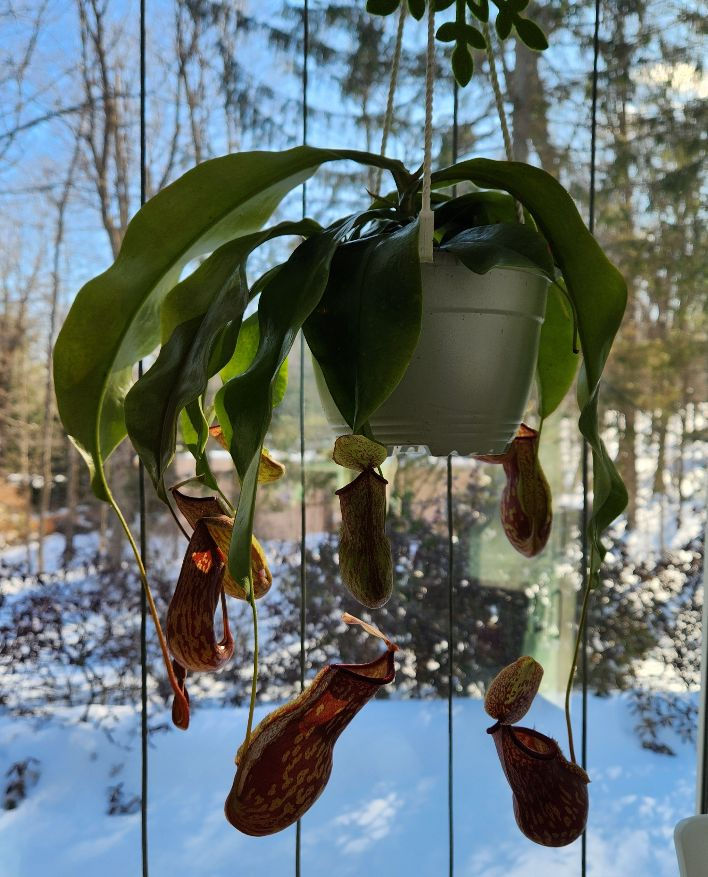
© Maria Gianferrari
DIANA – I just finished my second author/illustrator book that will be out in 2027. It’s called The Acorn’s Gift, and it’s about a squirrel family that loses their home and how they are tied to the population of oak trees in their part of the forest.
Wishing you both good luck with these and future projects. Is there something you want your readers to know about, or take away from, Just One Oak?
MARIA - Not only are oak trees beautiful, with their gnarled branches, and varied leaf shapes (see the back matter), but they are key to maintaining ecosystem equilibrium and biodiversity—they are shelter and sustenance for so many creatures. They sustain more than 950 species of caterpillars alone, and caterpillars are very important for food web health.
DIANA – My hope is that readers come away understanding what a keystone species is and that they are not only animals but can be plants too. We are losing our oak trees to climate change and introduced pathogens, and so the more people that appreciate the value of these magnificent trees, the more we can help slow the damage.
I definitely think that you both have succeeded in presenting the readers with a wonderful look at the role Oak trees play in our world. Last question, what animal or natural feature (place) do you want to learn more about? Why?
MARIA - I love temperate rainforests—they are so beautiful and peaceful. I hope to visit Vancouver Island someday. I’d especially love to see coastal wolves!
DIANA – Native spring ephemeral plants and introduced invasive plants: I love our native spring ephemerals, and I wasn’t aware until some years ago that we have this entire class of forest plants that have evolved to flower just before the tree canopy leafs out. I am interested in introduced invasive plants because, at least around where I live, it’s an increasing problem that of course affects our spring ephemeral populations. Invasive plants have the ability to completely change ecosystems down to the soil chemistry. While I understand it has dark implications, learning more can help to find ways to mitigate it.
Thank you, Maria and Diana, it was wonderful to chat with you both.
Thank you so much for having us here, Maria!
Thank you so much for taking the time to engage us about Just One Oak!
Be sure to come back on Friday for the Perfect Picture Book #PPBF review of Just One Oak: What a Single Tree Can Be.
To find out more about Maria Gianferrari, or contact her:
Website: https://mariagianferrari.com/
Penny & Jelly Website: http://www.pennyandjelly.com/
To find out more about Diana Sudyka, or contact her:
Website: https://www.dianasudyka.com/
Instagram: https://www.instagram.com/tinyaviary/
🎈🎉 GIVEWAY for Just One Oak: What a Single Tree Can Be 🎉🎈
Maria Gianferrari is offering one lucky reader a book!
- Simply comment below or on Friday's #PPBF (or both) to be entered in the random drawing on May 15th.
- Be sure to say where (if) you shared the post (Facebook, Twitter, Instagram, or Bluesky), and I'll add additional entries for you.
- Sorry US residents only.


Comments