
The Picture Book Buzz - Interview w/Rene Araneda, Lawrence Schimel, and Review of Puma Concolor
René Araneda is a naturalist, designer, professional Wilderness Field Guide, and Chilean filmmaker specializing in wildlife documentaries. A founder of the Jane Goodall Institute Chile, his work has been nominated for Emmy Awards, has aired on channels including Animal Planet, Discovery, and NatGeo, and has been narrated by figures including Barack Obama, David Attenborough, and Pedro Pascal.
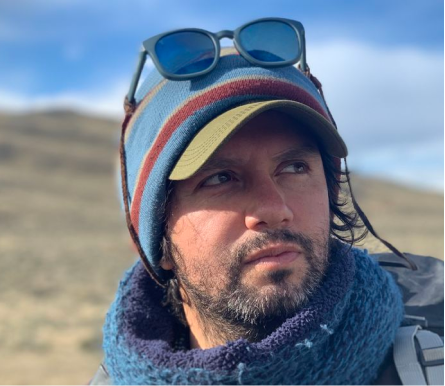
Check out his stunning story on Instagram about working in Parque Nacional Torres Del Paine, documenting the Pumas!.
This is René’s debut as a picture book author.
Lawrence Schimel is a prolific author and literary translator, working primarily in and between Spanish and English, who has written or translated over 300 books in a wide range of genres, including The Children of the Sun, Niños, 9 Kilometers, and the Batchelder Honor Book Different. His picture books have been selected for the White Ravens from the International Youth Library in Munich, Germany and have been chosen for IBBY’s Outstanding Books for Young People with Disabilities three times, among many other awards, honors, and distinctions.

His own writing has been published in over 60 languages translations. He lives in Madrid, Spain.
Their newest picture book, Puma Concolor, was released on September 29th.
Welcome René & Lawrence, thank you so much for stopping by to talk about your yourselves and your stunning picture book.
Let’s start with René. Tell us a little about yourself. (How did you get into film making? How long have you been making documentaries and films? Do you create scripts for your documentaries? )
RENÉ — I've been making natural history documentaries for more than sixteen years, focused entirely on nature, animals, and their coexistence with humans. It was a fairly improvised path at the start: I studied design, but I also studied film in Scotland, and afterward worked as a guide at a hotel in Torres del Paine, the most beautiful place in the world. What truly marked a before and after was meeting a nature photographer, who told me about something her son had done: going to Africa to train as a professional safari guide. So I went, and that course complemented everything I'd studied before. That's how my first television program in Chile came about, and from there I moved into international work. I've been at it for sixteen years now.
As for whether I write my own scripts — yes and no. Preproduction usually calls for an ordered story with an established script, but animals give you things that were never even part of the imagination, and you often have to adapt on the fly. In natural history, the script is constantly being adjusted — except when we want to highlight a specific behavior, or when the story is more human, centered on coexistence with nature; then it can be scripted more tightly.
I love that answer. I can just imagine how flexible you have to be when making documentaries of animals. What is one of the most fun or unusual places where you’ve filmed a documentary or translated a manuscript?

RENÉ — On one hand there are the places the child I once was always dreamed of: living in Africa, surrounded by the animals I'd always wanted to see. But I've also had the luck to film jaguars in the reintroduction project in Iberá, Argentina — an incredible experience, polar bears and walruses up north, and shoots that are unique and unrepeatable in themselves, like filming in the Diego Ramírez Archipelago: literally the last piece of land on the American continent between Cape Horn and Antarctica, surrounded by thousands of black-browed albatrosses, grey-headed albatrosses, blue petrels, penguins, leopard seals, and life everywhere. One of the most incredible places I've ever been. And also Colombia, filming near the hippos introduced by Pablo Escobar — there are always stories that only exist in unusual places.
LAWRENCE – Alas, most of my translation work happens at home, sitting at my desk. But one of the amazing things translation allows is for me to travel to so many different places around the world. And to help bring them back with me, to more readers, in a new language.
Wow, René those sound like amazing locations! And Lawrence you have an awesome job. René, what inspired you to create the picture book, Puma Concolor?

RENÉ — The inspiration comes from all the years we've had the privilege of getting to know this elusive, almost ghostlike species up close. In Chile, since we started filming these animals — thanks to the tourism that generated and a national park that has protected them properly — pumas have become more and more visible.
That's let us get to know them over the years, season after season, and come to understand their social relationships and just how remarkable they are in their capacity to adapt. That alone is enough to inspire anyone to tell their story. As many documentaries as we make, a picture book with illustrations was still something on my list, and an invitation from Amanuta made the decision for me — it wasn't something I could say no to. It was a wonderful experience, one that fills me with happiness and pride.
I am so glad that you created this awesome book! Lawrence, what about Puma Concolor drew you to translate it?

LAWRENCE - Lately, I have had an opportunity to translate more and more illustrated non-fiction. And I've translated almost a dozen books by Chilean publisher Amanuta, the original publisher for Puma Concolor.
While I have always been a voracious reader and started publishing as a writer when I was still in high school, I actually started in university as a marine biologist—my dream since I was a kid was to be like Jacques Cousteau. But I am severely allergic to (eating) fish, but also had a few attacks after touching them and then my lips or eye, so had to give up that dream and I switched to studying literature (I was already creating it).
Anyway, getting to translate a book like this was like reliving those early naturalist dreams–even if this time on land, in Chilean Patagonia, instead of in the ocean.
I am so glad you got this chance Lawrence. René, what was the toughest part of writing Puma Concolor? What was the most fun? How different is it than creating a script for your films?
RENÉ — The toughest part was making sure everyone I care about felt honored by it — the local community, the people who visit the park, everyone who came to know this puma over the years. I wanted a real, honest story, and a grounded one, built around a kind of "behind the scenes" approach that showed how we observe in the field respectfully and without interfering, told through specific milestones in this female's life with her cubs.
The most fun part was seeing the illustrations and recognizing so many friends in them — people I've shared months and years in the field with. Over time, we've become a family with the whole Torres del Paine team.
As for how different it is from writing a script — not that different, really. Writing a script or a story always involves storytelling, an arc, something you want to highlight and share. The real difficulty was something else: this subject was very close to me, and it isn't easy to condense a lifetime of experiences with an animal we came to love so much.
I can only imagine how much you had to condense and/or cut to fit with the picture book format. Lawrence, what was the hardest or most challenging thing about translating Puma Concolor?
LAWRENCE - One of the things I love about this book is it has both lovely, poetic language, but also is full of scientific facts. With all the different animal names, I always do detective work to look up the common local name to find the scientific name (if it wasn't already in the book) and then see how we say that in the new language. I also worked with my editor to sometimes add in a tiny bit of cultural information, things that in Chile everyone might know, but which for readers so far away it was helpful to have an extra detail about the geography, say, to make sure everything was clear.
But in general, it's such a beautiful, lyrical text, so it was a joy to recreate that in English. To make readers care as much about these wild and majestic creatures (who are largely unknown or there are a lot of prejudice and misinformation about them) through the moving story of one mother puma, Rupestre, and her cubs.
Thank you for sharing this 'behind the scenes' aspect of translating. René, how many revisions did Puma Concolor take from your first version to publication? What was the most surprising thing you discovered about writing a picture book?
RENÉ — There were revisions, but the process felt very organic, working alongside Ana Pavez at Amanuta — we always had a clear, simple vision of what we wanted to tell. Having a daughter — Alicia, who's about to turn five — was an extra source of inspiration while writing it, thinking of her. The revisions were mostly about simplifying: cutting or adding details until it felt easy to understand without losing completeness, since telling a puma's story means weaving together biology with more personal aspects of the animal.
I think you did a wonderful job creating this book. Lawrence, how many revisions did the translation of Puma Concolor take from your first version to publication? How does this compare with your other picture book translations?
LAWRENCE - Picture books have very few words but often go through many more revisions than longer texts might. Because you can't have anything extraneous, every word needs to be there. And both the text and art need to work together. So, we went through various drafts before layout, and then again we went through and revised once everything was in place. To make sure nothing was redundant (if the art already showed something happening) and also that all the text fit where it was supposed to.
Often with picture books, you distill and distill. Especially for fictional books, which are many times read aloud, the books have to be speakable. And by a non-professional actor.
I imagine that translation adds a little more to the already complicated task of merging illustrations and succinct text. Did anything surprise or amaze you when you first saw Julio Antonio Blasco’s illustrations? What is your favorite spread?
RENÉ — His work is wonderful. It's beautiful to see how, after years of watching, photographing, and editing images of these animals, Julio Antonio's hand and artistry give them a personality all their own. Seeing the pumas portrayed that way was incredible.

Text © René Araneda, 2026. Image © Julio Antonio Blasco, 2026.
Translation by Lawrence Schimel, 2026.
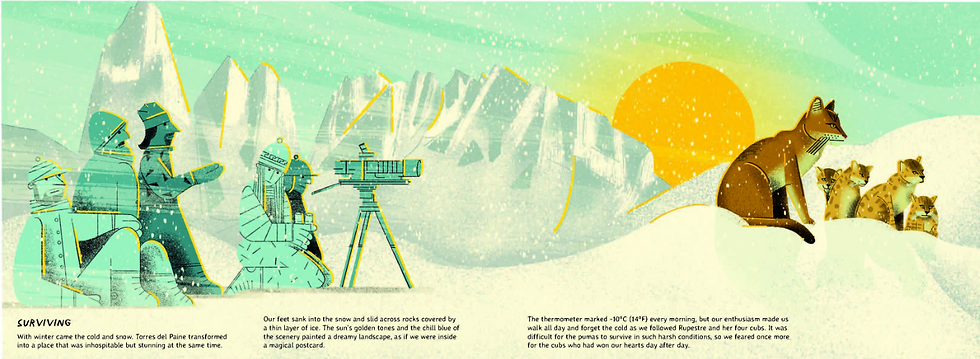
I have several favorite spreads, but one of the ones I love most is the winter spread — the weather conditions, the cubs in the ice and snow. In fact, I asked Amanuta to print it as a large poster for my daughter's room.
LAWRENCE - I love how the pumas are both accurate but still so artistic, often created with just a few lines and then color, but they have so much emotion and energy.
Text © René Araneda, 2026. Image © Julio Antonio Blasco, 2026.
Translation by Lawrence Schimel, 2026.
I also like the winter spread right after the one René mentions, where we see him and his team, all of them with serious expressions as they're enduring the cold and snow, but still committed and enduring. It's such a contrast to the opening spread, full of big smiles–even on the pumas. It really shows the dedication of his team to bring this story to us and also reveals the harsh conditions the pumas themselves must endure each winter.
Both of these illustrations are stunning. I love the pictures of the family. René, was there anything you discovered in your research or filming that you wish you could have included in Puma Concolor’s text or back matter?
RENÉ — I would have loved to dedicate a book to each of the pumas we've come to know over the past fifteen years. Rupestre was the protagonist alongside her cubs, but there have been many other important pumas, each with unique behaviors and social relationships, and that survival instinct that never stops amazing us.
One that marked me especially was key to my first international documentary, with Animal Planet: a puma born without a tail. She had a sister, whom we ended up calling "Hermana" (Sister), and we followed both of them their whole lives. The tailless puma went to Argentina, where — according to rumor — she was killed; her sister lived until just a few years ago here in the park, and we had the good fortune to know her intimately, year after year. That's what got left out of the book — I would have loved to cover more of the individual stories of each puma we've known: males, cubs, females.
Maybe you need to write a middle grade, illustrated novel that captures their stories. So they don't get lost. Is there something you want your readers to know about Puma Concolor?
RENÉ — That it's a dynamic story that hasn't ended. Rupestre passed away earlier this year, as a natural part of her life cycle, but the story keeps evolving: her cubs are still out there, and with them, new generations. While we go on with our lives in the city, these animals — not just the ones in Torres del Paine, but the species as a whole — keep fighting to survive every day. This is the best place in the world to encounter pumas respectfully and responsibly, but in other parts of the Americas they don't have it so easy: more and more people are altering their ecosystems and hunting them, legally or illegally depending on the country. It's a survival story that goes beyond one individual — it's the survival of a species, like so many others. That's what I'd want readers to take away.
LAWRENCE - I was really moved by the solidarity and sisterhood between female pumas that I learned about while working on the book, as they work together to raise their cubs, and hope the book in general inspires its readers to feel similar sentiments of solidarity about the relationship between humans and the other creatures we share this world with.
I truly hope that the book encourages readers to look after the survival of all species on the fragile spinning ball we all call home! Are there any projects (books or films) you are working on now that you can share a tidbit with us?
RENÉ — Right now I'm actually traveling to a five-week shoot, once again with pumas in Patagonia, though I can't share much — it won't be out until 2028 or 2029. There are also two other projects we've been working on for the past three or four years that will come out in between. All of these take time, and we can really only talk about them once they're finally released. But they're all connected to nature, to animals and their stories of coexistence with humans, across different countries. As a team, we keep observing the natural world and trying to help people fall in love with it, so it can be better cared for.
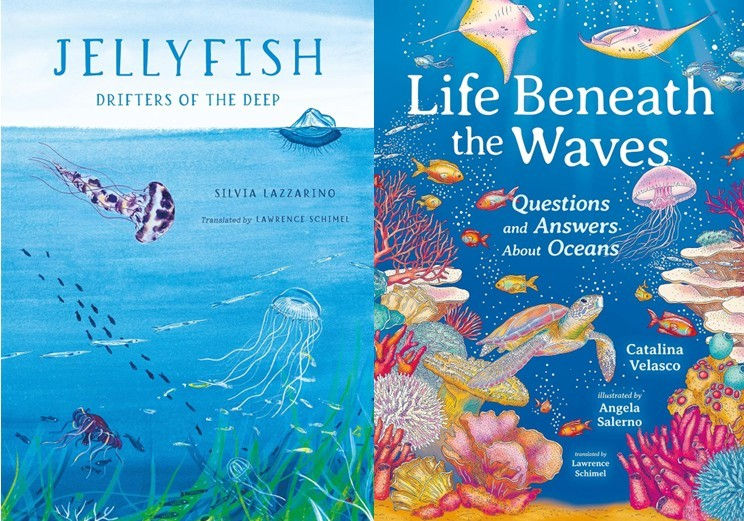
LAWRENCE - I translated a few other books from Amanuta that are publishing soon or have just come out. Including two about marine life (letting me indulge my childhood dream of exploring the ocean--but safely, from my desk) Jellyfish: Drifters of the Deep written and illustrated by Silvia Lazzarino, which was just published this month, and Life Beneath the Waves: Questions and Answers about Oceans written by Catalina Velasco and Angela Salerno, forthcoming in February 2027, both from Orca Book Publishers.
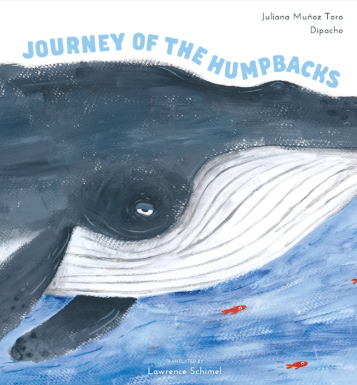
I also translated for Eerdmans a non-fiction book about Humpback Whales, Journey for the Humpbacks, written by Juliana Muñoz Toro and illustrated by Dipacho. In it, the whales travel from Antarctica, alongside the Chilean Patagonia where Puma Concolor takes place, up to the Equator, and then back again on their annual migration.
Intriguing! I will definitely be keeping an eye out for these documentaries. Lawrence these books look and sound awesome, glad you got to be "close" to your childhood dream! Last question, what is your favorite National Park or Forest, regional park, or city park (anywhere in the world)? Or the one you’re longing to visit. Why?

RENÉ — The answer is simple, and I've always given the same one: Torres del Paine. Beyond the thousands of places in the world, it's the one I love most and the one that holds the memories that changed how I see the world. It isn't just a beautiful place — with incredible light, unique mountains, and animals that make it even better — it has a personal history with me: it's where I found what I wanted to do with the rest of my life. That's why it holds a special place in my heart.
LAWRENCE – I would love the opportunity to visit Torres del Paine. I was only in Patagonia once, in the town of Ushuaia on the Argentine side, but without getting a chance to explore the natural world of the region.
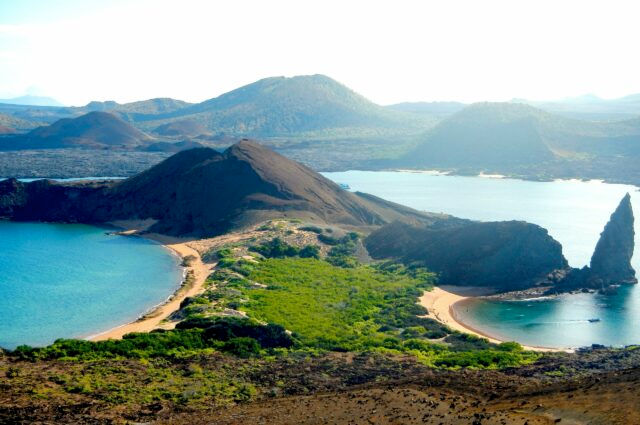
©-Genevieve-Westrope
I'd also love to visit the Galapagos Islands.
Thank you, René and Lawrence for stopping by and sharing with us a bit about yourselves and your wonderful new picture book. It was wonderful to chat with you.
To find out about René Araneda, or contact him:
Website: https://renearaneda.cl/
Instagram: https://www.instagram.com/renearaneda
To find out more about Lawrence Schimel, or contact him:
Website: https://www.lawrenceschimel.com/
Review of Puma Concolor
A fan of Lawrence Schimel's translations, I was so excited to discover this amazing picture book about the Puma's of Patagonia. Amazingly, as I started working on this post, a cougar gracefully walked across the edge of my backyard and into the greenbelt. I was so mesmerized, I didn't grab my camera in time. My neighbor has seen one a few times over the years, but I had only ever gotten a fleeting glimpse of a tail disappearing into the shrubs. It was such a special moment, a rare gift. This stunning picture book offers readers a wonderful primer on these amazing cats and their habitat as it chronicles the adventures, hardships, and affection of a puma family in the Torres Del Paine National Park in Chile.
Puma Concolor: In Search of Patagonia’s Wild Pumas
Author: René Araneda
Illustrator: Julio Antonio Blasco
Translator: Lawrence Schimel
Publisher: Eerdmans Books for Young Readers (September 29, 2026)
Ages: 7 - 12
Nonfiction
Themes:
Pumas, conservation, and South America.
Synopsis:
Join a BBC Earth documentary crew as they film wild pumas in the mountains of Patagonia
At the southernmost tip of South America lives the world’s densest population of wild pumas―including a female named Rupestre and her four cubs. Join noted wildlife filmmaker René Araneda and his team as they follow Rupestre and her family. Witness them play, hunt, and learn to survive in the wild―through some of the toughest circumstances, even the freezing cold winter.
Bold, graphic illustrations from Julio Antonio Blasco join with sidebars and infographics to bring Patagonia and its pumas to life. Readers will discover memorable and awe-inspiring facts about puma anatomy, the wider feline family, local conservation efforts, and more. Puma Concolor is the perfect nonfiction book for aspiring biologists, wildlife fans, conservation supporters, and anyone who’s ever loved a cat―big or small.
Translated from Spanish by Lawrence Schimel, Puma Concolor was shaped by the footage of Rupestre and her cubs Araneda and his team filmed on location in Patagonia. The content aired as episode 1 of the BBC Earth docuseries Dynasties II, narrated by David Attenborough.
Opening Lines:
THE ADVENTURE BEGINS
My name is René, and I'm a nature guide and documentary maker.
For more than fifteen years, I've had the privilege of delving into the
vast landscapes of Patagonia (a region in South America in southern
Argentina and Chile), exploring every corner and discovering its wildlife.
Among all of the inhabitants of this untamed land, there is one creature
who has captured both my attention and my heart; the puma.
My goal has always been to observe animals' natural behavior
in a respectful and responsible way, and to make documentaries
so that the whole world can meet, fall in love with, and care for
wildlife like these big cats.
What I LOVED about this book:
I love that the author and wildlife filmmaker René Araneda conversationally addresses the reader and introduces himself, his crew of "camera operators, biologists, sound techs, and producers," and his beloved pumas of Patagonia. Julio Antonio Blasco did an awesome job with this opening illustration, using the same color for the mountains, truck, and film crew. Visually showing their desire and goal to blend into the background and record "the animals behaving naturally-living freely, without human influence."

Text © René Araneda, 2026. Image © Julio Antonio Blasco, 2026.
Translation by Lawrence Schimel, 2026.
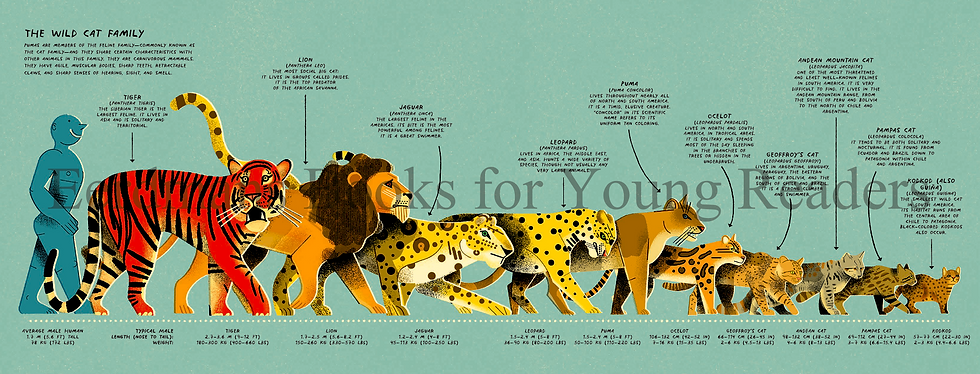
Taking a few moments to ensure that readers are familiar with the Puma, the book offers some wonderful informational spreads, like this stunning graphic of wild cats around the world, which includes physical statistics, their habitat, and a fun fact for each cat.
Text © René Araneda, 2026. Image © Julio Antonio Blasco, 2026.
Translation by Lawrence Schimel, 2026.
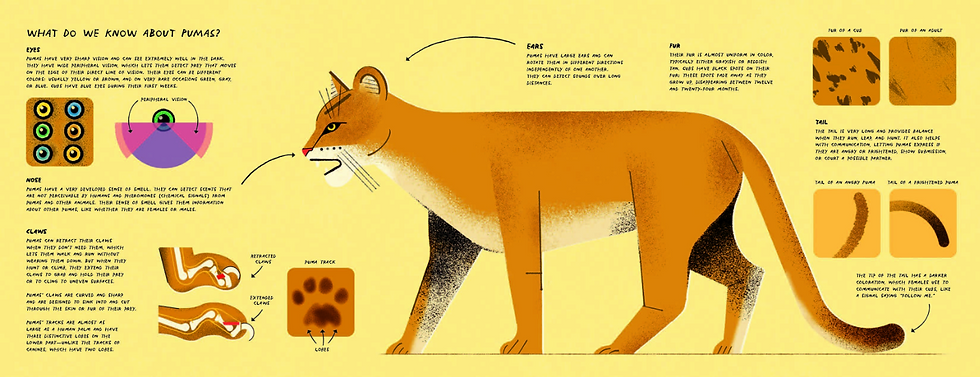
This section also includes a map of their range in North and South America and their corresponding different names (Puma, Cougar, Mountain Lion, Panther, & Catamount), a four-panel image of their habitats, a brief introduction to Torres Del Paine National Park in Chile, and a bit about the Puma's physical characteristics.
Text © René Araneda, 2026. Image © Julio Antonio Blasco, 2026.
Translation by Lawrence Schimel, 2026.
As an added bit of interactive fun, a QR code, linked to the Eerdmans' site, accompanies the page on the Puma's unique vocalizations of purring, screaming & whistling. Kids will enjoy getting to listen to the scream, grunt, and whistle of a Puma, but a Guanaco alert call, a flying Andean Condor, a number of other birds, and a South American Grey Fox.
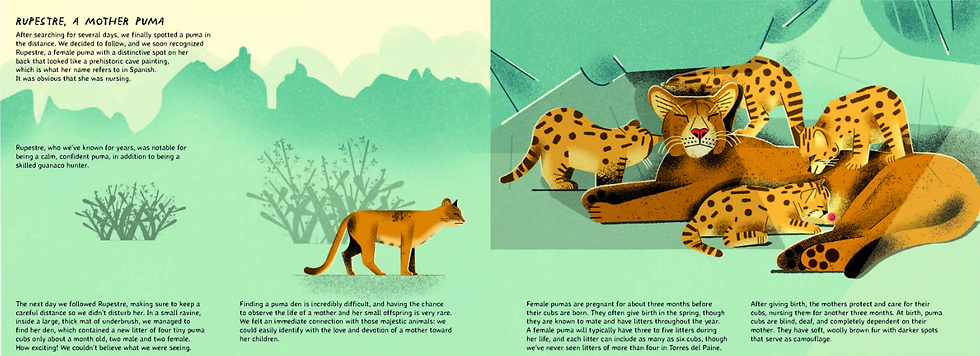
When the story continues, we join the crew as their search within the park located a female puma, Rupestre. Carefully following her from a distance, they made a special discovery - they found her den and four cubs.
Text © René Araneda, 2026. Image © Julio Antonio Blasco, 2026.
Translation by Lawrence Schimel, 2026.
Offered the rare opportunity to observe and record the interactions of a mother and her babies, the film crew watched and followed the family throughout the seasons, as they interacted, played, struggled, avoided male territorial disputes, discovered skunks, and Rupestre taught the cubs how to hunt. Even 14 degree mornings couldn't dampen the crew's enthusiasm.
I love the way Julio Antonio Blasco mirrored the opening with the film crew continuing to be a part of the background respectfully recording the cubs first winter. (Look back at Lawrence's favorite image in the interview.) And also inserted members of the film crew, blending them into the backgrounds, throughout a number of the illustrations, reinforcing the respectful, non-interfering, observation of these amazing cats. The book continues to chronicle the family changes over the next two years.
A touching epilogue details the changes in opinions and behavior of neighboring ranchers as they witness the "enormous benefits to the natural ecosystems and the animal species that inhabit them" and includes a list of some of René Araneda's wildlife documentaries. This stunning picture book will delight future (and current) scientists, conservationists, and cat lovers inspiring further observation and protection of the puma and their entire habitat.
Resources:
create a diorama based on one of the moments in the book. Did you include the film crew? How did you blend them into the shadows?
draw a diagram or create a chart showing how the puma is a keystone species.
pair this with Cougar Crossing: How Hollywood's Celebrity Cougar Helped Build a Bridge for City Wildlife by Meeg Pincus, illustrated by Alexander Vidal and Puma Dreams by Tony Johnston, illustrated by Jim LaMarche (a child's introduction to patient observation of wildlife).
check out the announcement of a new species of wild cat discovered in Bolivia! "It's the first new species found in 100 years!" Check out the news here!


Comments